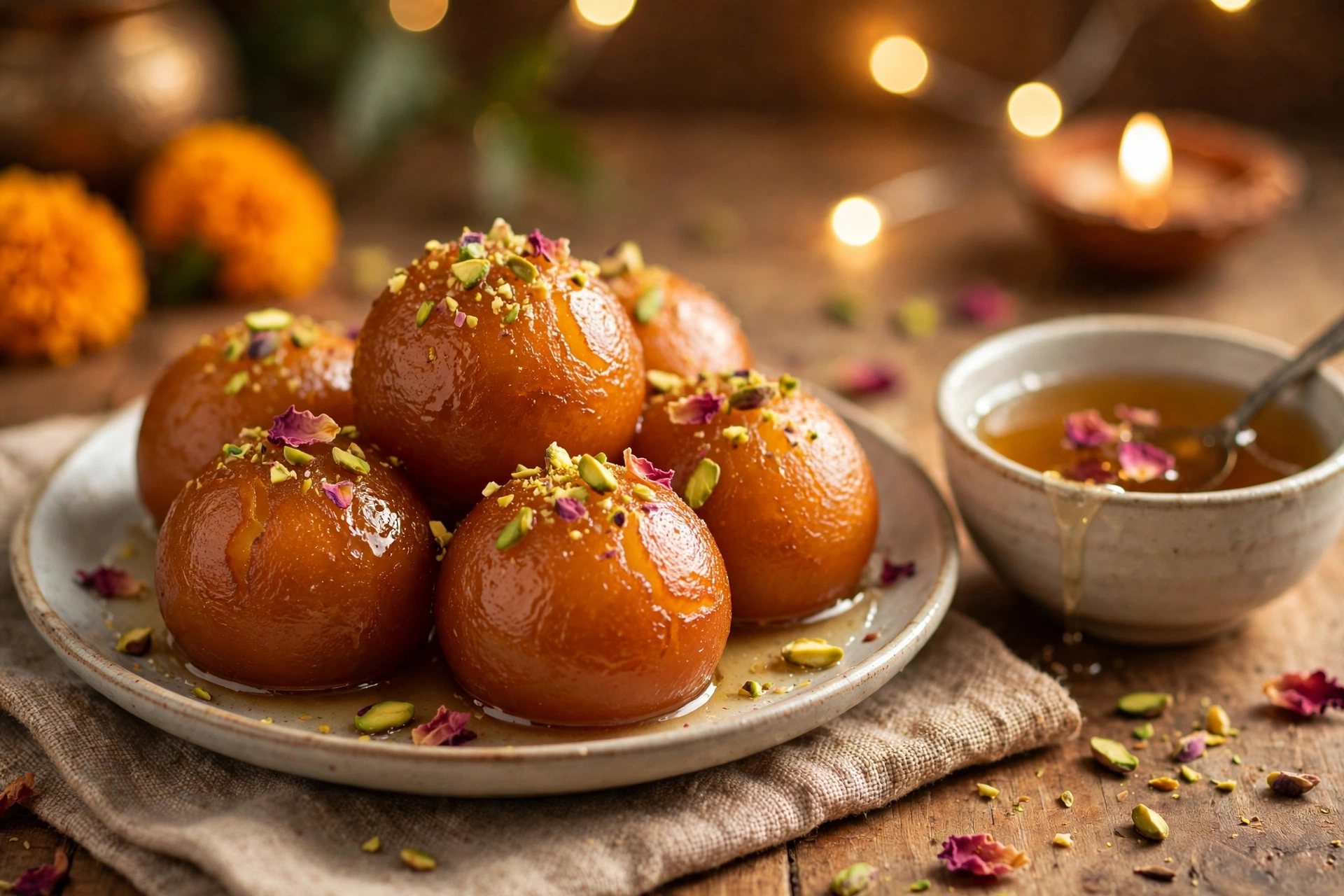
Gulab Jamun Recipe: Soft, Syrup-Soaked and Melt-in-the-Mouth
Prep time: 20 minutes Cook time: 30 minutes Soaking time: 2 hours (or overnight) Servings: Makes about 18–20 jamuns
There are certain smells that stop you mid-sentence, and for me, warm cardamom syrup is one of them. The moment a pot of gulab jamun syrup starts bubbling on the stove, my whole kitchen smells like every happy occasion of my childhood rolled into one — weddings, Eid mornings, and my grandmother rolling little dough balls between her palms faster than I could count them.
For years, I was honestly a bit scared of making gulab jamun at home. I had heard all the horror stories: jamuns that came out hard as marbles, jamuns that cracked in the oil, jamuns that looked perfect but stayed dry in the middle. What I eventually learned is that gulab jamun is not actually difficult — it is just particular. The dough wants a gentle hand, the oil wants patience, and the syrup wants to be warm, not boiling, when the two meet. Once you understand those three things, you will never buy the boxed mix again.
Why You’ll Love This Recipe
- The jamuns come out genuinely soft all the way through — no dense, rubbery centres.
- The dough uses everyday milk powder, so there is no need to hunt down fresh khoya.
- The syrup is flavoured with cardamom and a whisper of rose water, exactly like the sweet-shop version.
- They keep beautifully for days, and honestly taste even better on day two.
Ingredients
For the jamun balls
- 1 cup (120 g) full-cream milk powder
- 1/4 cup (30 g) all-purpose flour
- 1/4 teaspoon baking soda
- 1 tablespoon ghee, melted, plus a little extra for greasing your palms
- 3–4 tablespoons warm milk, added a spoon at a time
- A tiny pinch of salt
For the sugar syrup
- 1 1/2 cups (300 g) granulated sugar
- 1 1/2 cups (360 ml) water
- 4–5 green cardamom pods, lightly crushed
- 1 teaspoon rose water (optional but lovely)
- 1 teaspoon lemon juice (this stops the syrup from crystallising)
- A few strands of saffron (optional)
For frying
- Ghee or a neutral oil, enough for deep frying (about 2 cups / 500 ml)
Instructions
- Make the syrup first. Combine the sugar, water and crushed cardamom in a medium saucepan. Bring it to a gentle boil over medium heat, stirring until the sugar dissolves completely. Let it simmer for 4–5 minutes until it feels slightly sticky between your fingers — you want a thin, half-string consistency, not a thick syrup. Stir in the lemon juice, rose water and saffron, then turn the heat down to the lowest possible setting. The syrup must stay warm while you work.
- Mix the dry ingredients. In a wide bowl, whisk together the milk powder, flour, baking soda and salt, rubbing out any lumps in the milk powder with your fingers.
- Bring the dough together. Add the melted ghee and rub it into the dry mixture with your fingertips until it resembles breadcrumbs. Now add the warm milk one tablespoon at a time, mixing gently with your fingers, until you have a soft, slightly sticky dough. It should feel like soft playdough. Do not knead it like bread — overworking develops gluten and makes hard jamuns.
- Rest the dough. Cover the bowl with a damp cloth and let the dough rest for 10 minutes.
- Roll the balls. Grease your palms lightly with ghee. Pinch off small portions of dough, roughly a tablespoon each, and roll them between your palms into smooth balls about the size of a walnut. Apply gentle, even pressure so there are no cracks on the surface — cracks now mean cracks in the oil later.
- Heat the oil. Pour the ghee or oil into a deep, heavy pan and heat it over low to medium-low heat. The oil should be around 150°C (300°F) — warm, not smoking. Test it by dropping in a tiny piece of dough; it should sink, sit for a few seconds, then slowly rise with gentle bubbles around it. If it browns instantly, your oil is too hot.
- Fry slowly and patiently. Slide 6–8 balls into the oil at a time. Do not stir them with a spoon at first; instead, gently swirl the oil or nudge them with a slotted spoon so they colour evenly. Fry for 5–7 minutes, turning often, until they are a deep golden brown all over. They will puff up as they cook, and this slow frying cooks the centres properly.
- Drain and soak. Lift the jamuns out with a slotted spoon, let the excess oil drip off for a few seconds, and drop them straight into the warm syrup. Repeat with the remaining batches.
- Let them soak. Leave the jamuns in the syrup for at least 2 hours, though overnight in the fridge is even better. They will swell, soften and drink up all that cardamom sweetness.
- Serve. Warm them gently before serving if you like — ten seconds in the microwave or a few minutes in the syrup over low heat.
Tips and Variations
- If your jamuns crack while rolling, the dough is a touch dry. Wet your palms with a little milk and roll again; the surface will smooth out.
- Hard jamuns almost always mean one of three things: too much flour, dough kneaded too hard, or oil that was too hot, which sealed the outside before the inside could cook.
- Kesar pista version: sprinkle the soaked jamuns with finely chopped pistachios before serving for colour and crunch.
- Stuffed jamuns: hide a single raisin or a sliver of pistachio in the centre of each ball before rolling.
Serving and Storage
Serve gulab jamun warm or at room temperature, with a little of their syrup spooned over. They pair wonderfully with vanilla ice cream, a dollop of rabri, or simply a cup of strong chai after dinner.
Store them in their syrup in an airtight container in the fridge for up to a week — the flavour deepens as the days pass. They also freeze well in their syrup for up to a month; thaw overnight in the fridge.
A Sweet Little Finish
Gulab jamun taught me that the desserts we are most nervous about are usually the ones most worth learning. Make a batch for your next family dinner, and watch how quickly the bowl empties — and how quickly someone asks for the recipe.